
Fr. Santiago Cerrato (“Santi”), CMF, recalls his testimony before Pope Leo XIV at the Cathedral of Santa Ana in Las Palmas de Gran Canaria, Spain, on 11 June 2026, and reflects on the principal messages of the papal visit to the Canary Islands.
Fr. Santi, CMF, during the Pope’s meeting with priests, religious and pastoral workers in the Cathedral of Santa Ana, you took the floor to give your testimony. On a personal level and as a Claretian missionary, what feelings moved you as you spoke on behalf of the community, and how would you describe the closeness and attentive gaze of Pope Leo XIV as he listened to the reality of the islands?
It all began a couple of months before the Pope’s visit to Spain, when the Vatican confirmed the events and meetings in the different places the Holy Father would visit. Our bishop, Bishop José Mazuelos, proposed the gathering in the Cathedral of Las Palmas as an opportunity for the Pope to gain direct, first-hand knowledge of the diocese’s pastoral reality.
Because time was limited, the official interventions, so to speak, were reduced to the bishop’s opening greeting and two testimonies: one person speaking on behalf of the clergy and consecrated life, and another speaking on behalf of the Church’s pastoral activity and the commitment of the laity to the work of evangelisation.
In that context, I received the bishop’s invitation to speak to the Pope on behalf of everyone as a priest, parish priest, dean and Claretian missionary. Honestly, at first I was not fully aware of what this would entail, but my soul and heart were filled with gratitude, a sense of immense privilege and undeserved joy. All of this was accompanied by the peace that always comes with the things of God—things that come to you without your having sought or requested them.
Although I could not announce it publicly and had to prepare the testimony in time to send it to Rome, I knew that behind me stood my community, my Claretian brothers in the Congregation and the diocesan team that coordinated the entire process. Little by little, I became aware that my intervention had to include the presence, dedication, life and mission of all the clergy and consecrated persons on the island. It also had to convey the evangelical newness brought by Claret’s visit, which became a driving force for evangelisation and spiritual and social renewal on the island 178 years ago.
Then something happened that had neither been planned nor could have been planned: THE GAZE. I am very glad that you asked me about the Pope’s closeness and his gaze. Was I nervous? Not excessively. God has given me serenity and peace when facing complex or unexpected situations.
Looking back now, I felt immense joy from early that morning, when all the brothers in the community left the house together and walked to the cathedral, about 30 minutes away. From then on, everything became an adventure and an experience that promised to be unique—a grace from heaven.
The Pope arrived, entered the cathedral and blessed the church. He stopped at the tabernacle and knelt in prayer for a few moments. Then came the bishop’s greeting, the proclamation of the Word of God and the singing of the psalm. And then it was time for my intervention.
As soon as I stood before the microphone, I encountered the Pope’s gaze: a gaze that gave me tranquillity, closeness, kindness and a warm welcome, without any sense of nervousness or haste. I felt that gaze like a door opened wide, receiving every word that came from my lips. It was the gaze of a friend, a brother and a pilgrim walking the same path: the path towards God, from whom we came.
I felt that his gaze embraced the struggles and loneliness that we sometimes experience in our consecration, as well as our hope and joy for the gift of the vocation we have received.
Pope Leo XIV encouraged the Church in the Canary Islands to “embrace the Cross of Christ” and remain on course amid difficulties. As a Claretian, belonging to a charism born when Saint Anthony Mary Claret carried out his missionary work on foot through these same lands, how does the Pope’s call to courage and fidelity resonate with the historical roots of your Congregation in the archipelago?
I must begin by saying that anyone who has not visited the Canary Islands cannot imagine the grateful memory of Claret, the evangelising footprints he left behind and the missionary style he introduced into Canarian society, the clergy, and the culture and politics of the time. He left no one indifferent. Leading historians generally agree in describing the island’s recent history as having a before and an after Claret’s presence there.
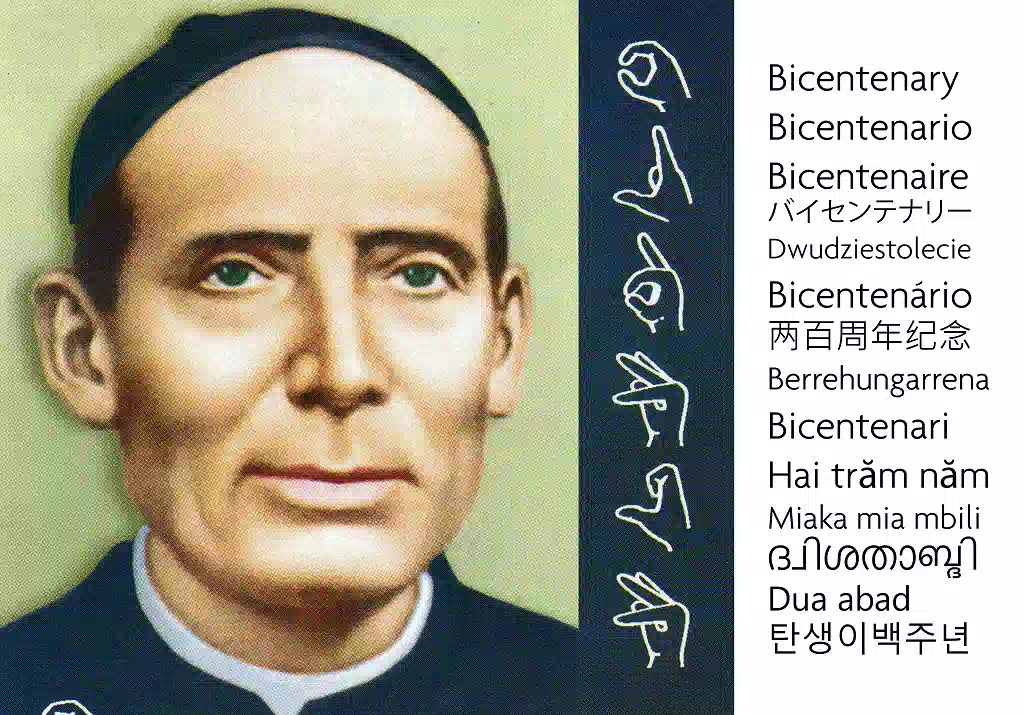
Our Superior General, who has visited the island several times, experienced an important historical jubilee moment here: the 175th anniversary of Claret’s arrival on the island, exactly one year before the Congregational Jubilee. Some of the words I addressed to the Holy Father came from the heart because I had treasured them since the Superior General’s visit: the Claretian Congregation in the Canary Islands experiences a particularly genuine and innovative synergy and communion within the local Church.
Within this context of communion and collaboration, the Claretian spirit offers these lands challenges and objectives marked out by the Founder himself. As the great Claretian missionary Pedro Fuertes Combarro, CMF, once said, we should not forget that the people of the Canary Islands were Claretians before the missionaries themselves were. Indeed, two months after leaving the islands for Catalonia, Fr. Claret founded the Congregation.
The difficulties, opposition, spiritual poverty and social deterioration that existed in the Canary Islands in Claret’s time were greater than those we face today. It is from this perspective that I understand the Pope’s appeal to the entire Church in the Canary Islands and throughout the world:
“I encourage you to continue moving forward, firmly rooted in Him, so that you may keep sailing courageously through this new period of history. When you encounter difficulties, lift up your eyes and ask the Holy Spirit for the grace to live united in faith, hope and charity.”
I feel that Pope Leo, responding to what he heard and witnessed, emphasised these words of Claret, which remain relevant and timely today, when he defined the Claretian missionary:
“He is a man on fire with love, who spreads its flames wherever he goes. He desires mightily and strives by every possible means to set the whole world on fire with God’s love. Nothing daunts him; he delights in privations, welcomes work, embraces sacrifices and thinks only of how he may follow and imitate Jesus Christ in praying, working and enduring for the good of all souls.”
During his visit, the Pope described the people of the Canary Islands as a “people without borders” and recalled that “human dignity has no passport.” Through organisations such as Proclade Canarias, the Claretians in Las Palmas are deeply involved in the social fabric of the islands. How does this powerful message from the Pontiff encourage your daily work and commitment to the most vulnerable and to the reality of migration along the coasts?
Wherever there is a missionary and an apostolic mission inspired by the Claretian charism, there must always be a commitment to proclaim and bring the Gospel to everyone, especially to those most in need and those wounded by structural injustices.
Through his actions and words, the Pope has raised not only our eyes but also his voice, showing us where we must enter and remain in the places of mission: the peripheries. In doing so, we are simply imitating the Master and Lord.
This option to care for the vulnerable and accompany the weakest is fostered and nurtured in the two main missionary centres to which we have been sent on the island. The first is the school, as a platform for evangelisation, which must continue to make a decisively evangelical choice—without fear or hesitation—within educational structures. The second is the parish, a place to accompany, form and evangelise people through the different stages of their journey of faith, while welcoming those who arrive, knock, ask for help or need a friendly home—what Pope Francis called a field hospital.
There is also a third field of mission, accompanied, directed and supported by the Claretian Missionaries, which represents a genuine commitment to the most vulnerable, to migration and to prison ministry. Allow me, in this context, to mention a brother who has spent decades building bridges across this world of borders with competence and professionalism: Fr. Dionsio Redondo, CMF.
He has built teams, promoted networking and fostered synodality, supported by a “stronghold” that makes the entire work of evangelisation credible today: the CMF community.
The message of the Holy Father, who travelled throughout this country and this archipelago from north to south, finds concrete expression in work that the Claretian Missionaries in the islands have consistently promoted year after year: providing formation, accompanying people, creating structures, and fostering communication and communion within the entire diocesan reality. This work is also carried out in cooperation with civil organisations willing to join the project of building the Kingdom of God through justice, peace, solidarity and universal fraternity.

One of the points the Holy Father emphasised most strongly in the cathedral was the need to build together and to remain a united and missionary Church that journeys in communion. From the perspective of the Claretian communities, schools and parishes of Las Palmas, what practical steps can be taken to respond to the call to synodality entrusted to us by the Pope?
In my testimony and in the words I addressed to the Holy Father, I explained that one of the riches of this diocese is the synergy and collaboration among the various religious and consecrated charisms, the clergy and the active forces of the laity in carrying out pastoral work and evangelisation.
In this respect, and for all the reasons I have mentioned, the Claretian community makes a significant contribution that is recognised and appreciated throughout the diocese. We are called the sons of “El Padrito,” the affectionate name given by the people of the Canary Islands to Saint Anthony Mary Claret.
We have always sought to be present and willing to collaborate in the diocese wherever we have been asked or called. At a time such as this, ours is a large community of priests—eight at present—and we cooperate very well with the diocesan clergy whenever we are called to assist with specific tasks or in the missionary and evangelising fields proper to our charism.
Following the Pope’s visit, our task as religious inserted into this local Church is to continue contributing to good practices in evangelisation; to strengthen processes of evangelisation and Christian initiation; and to accompany and assist a diocesan clergy that feels overwhelmed by the shortage of vocations and the immense pastoral and parochial workload.
We must also be a beacon and a light by continuing to collaborate in ministry with migrants, social inclusion, healthcare ministry, education, family ministry, youth ministry and vocational ministry.
It is often said that the most important part of a papal visit begins the day after the Pontiff returns to Rome. With the words of Pope Leo XIV still resonating in the Gran Canaria Stadium and in Arguineguín, what is the principal challenge or “fruit” that the Claretian community of Las Palmas is adopting as its roadmap for the immediate future?
The words of Pope Leo have confirmed and strengthened our dreams as a Congregation of missionaries and as a Claretian community inserted into the local Church.
We take up the following challenges:
First: To recognise that we are called, loved and sent by the One who has set his gaze upon each of us. We are not called by God to achieve success, nor are our apostolic works sustained by applause or numerical effectiveness. They are sustained by fidelity and enduring gratitude, which enable us to grow each day in trust in the One who has called us and equipped us for the mission, even amid our own weaknesses.
We must also offer an authentic witness of communion by responding to God’s call to care for one another within the community.
Second: To place the Word of God at the centre. By the very definition of our charism, we are servants of the Word of God—a Word that must be heard, treasured in the heart, proclaimed and put into practice through our lives.
We must always place the Word of God at the centre of our missionary activity in every area of pastoral ministry. It must be one of the lights guiding our roadmap at this particular moment in history. We must also create structures that enable the first missionary proclamation to be made with creativity and boldness.
Third: To respond to the cry of our people. So many of our brothers and sisters suffer displacement from their homeland and are forced into exile by injustice or while fleeing exploitation by criminal networks. Families and entire neighbourhoods are marginalised and excluded within our own cities and towns, while many areas of contemporary culture either do not know or reject the Gospel.
Faced with these realities, we must lift up a compassionate and committed gaze towards society and its challenges so that we may bring God’s Good News.
Outside the prepared text, I give thanks to God for the Pope’s visit to Spain and, in particular, to the Canary Islands. His presence has stirred us and urged us to continue placing our trust in the One who has called us.
Here and now, we are called, as Claret said, to ensure that God may be known, loved, served and praised by all.